
Golden Ratio Architecture: Phi Fact vs Fiction in Iconic Buildings & Timeless Design
Why Some Buildings Whisper Harmony While Others Scream Chaos
Imagine standing before a towering facade that pulls your eye effortlessly upward, every proportion feeling instinctively right. Now picture a structure where lines clash, scales jar, and the whole composition leaves you unsettled. This isn't mere taste—it's the psychology of perception at work. Our brains crave balance, and architects have long tapped into mathematical principles to deliver it.
Enter the golden ratio, often denoted as Phi (φ ≈ 1.618), the divine proportion that architects invoke for golden ratio architecture. This irrational number, where a line segment divided so the ratio of the whole to the larger part equals the larger to the smaller, creates spirals and rectangles that echo nature's patterns—from nautilus shells to galaxy arms. In phi in architecture, it's hailed as a shortcut to timeless aesthetics. But is it fact or elegant fiction? Let's dissect the evidence.
Ancient Wonders: The Great Debate on Mathematical Harmony
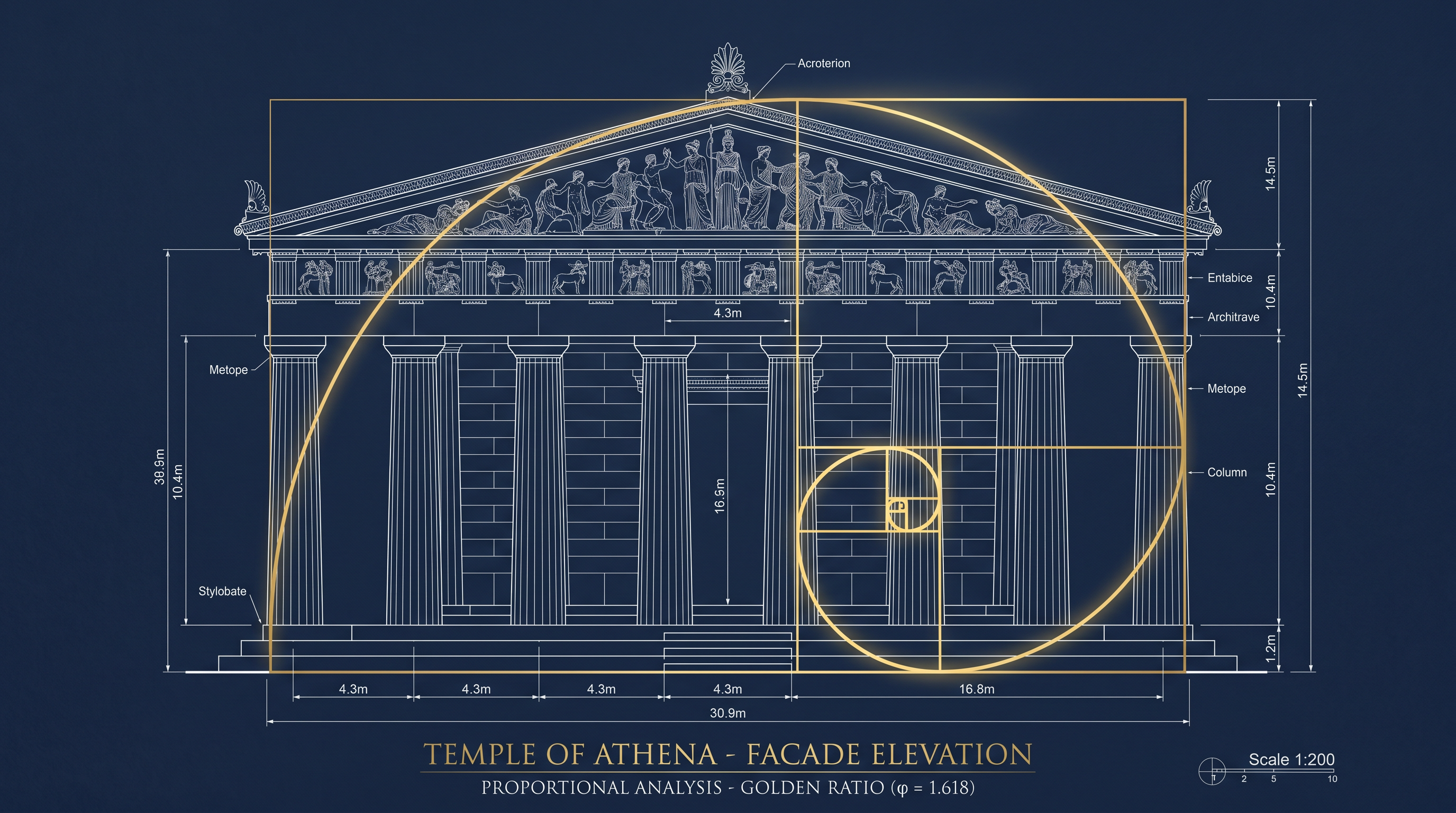
The Parthenon atop Athens' Acropolis stands as patient zero in the golden ratio buildings mythos. Proponents overlay the facade with a golden rectangle, claiming the columns and pediment align perfectly with Phi proportions. Walk its sun-baked steps, and the optical refinements—subtle curvatures to counter visual distortion—do evoke mathematical harmony.
Yet historians like J.N. Bronsted in the 19th century measured it meticulously and found discrepancies. Modern scholars, including Keith Kritchlow, argue the fits are approximate, possibly coincidental from practical builders using simple ratios like 4:9. Was it intentional golden ratio architecture? Or retrofitted romance? The jury leans skeptical.
The Great Pyramid of Giza: Phi or Pyramid Ploy?
Across the Mediterranean, Egypt's Great Pyramid fuels similar fervor. Slice its cross-section, and some see the apothem-to-half-base ratio hitting 1.618. Fibonacci architecture whispers here too, as the sequence (1, 1, 2, 3, 5...) approximates Phi. But Egyptologist Mark Lehner points to seked measurements—practical slopes like 5.5 palms per cubit—yielding pi, not Phi, more reliably.
These ancient icons showcase phi in architecture claims that dazzle but crumble under scrutiny. Mathematical harmony? Undeniably present. Intentional divine proportion design? That's the fiction we must question.
From Gothic Spires to Renaissance Precision
Fast-forward to the Middle Ages. Notre-Dame de Paris, with its soaring rose windows and nave, gets tagged for golden rectangles in plan views. The transept-to-nave length? Close to Phi. But medieval masons worked from ad quadratum grids—square-based geometries—prioritizing symbolism over irrational numbers. Phi sightings feel like pattern-seeking overkill.
Renaissance Revival: When Math Met Mastery
The Renaissance flipped the script. Leon Battista Alberti's De Re Aedificatoria (1452) codified proportions, praising the golden ratio for facades. Palladio's Villa Rotonda embodies this: portico width to depth spirals into Phi via recursive division. Here, fibonacci architecture meets intent—villas that read like Euclidean poems.
No longer retrofits, these were deliberate. Yet even Palladio favored musical ratios (like 3:2) alongside Phi, blending intuition with calculation for enduring appeal.
Le Corbusier and the Modulor: Modern Phi Reimagined
The 20th century brought modernism's machine-age rigor, but Le Corbusier rebelled with humanism. His Modulor (1948), a scale from human dimensions (1.83m man with upraised arm), wove in the golden ratio via Fibonacci steps: 43cm, 70cm, 113cm, scaling to 2.26m, 3.70m, and beyond.
Why? To reconcile metric standardization with bodily proportion. In golden ratio buildings like the UN Secretariat (1952), Modulor's red and blue series dictate window bands and setbacks, creating rhythmic facades that hug the skyline. Critics like Colin Rowe called it pseudoscience—Phi baked in arbitrarily—but pilots confirm its perceptual lift.
Legacy in the Glass Curtain Wall
Echoes persist in today's high-rises. Though brutalism sidelined it, parametric tools now revive phi in architecture, generating organic forms from Phi-based algorithms.
Practical Golden Calculations for Today's Architects
Enough history—how do you wield this in practice? Start with the golden rectangle: sides a and b where a/b = φ. For facades, divide height by width; if off, scale elements accordingly.
Window placement? Nest spirals: major axis at 0.618 from edge, minors recursively. Room proportions? 1:1.618 for living spaces feels expansive yet cozy—test via mockups.
- Measure base dimension (e.g., wall width = 10m).
- Golden calculation: height = width × 1.618 = 16.18m.
- Subdivide: next band at 10 / 1.618 ≈ 6.18m.
- Validate visually; adjust for site, code, client.
This workflow elevates divine proportion design from gimmick to tool, especially in sustainable builds where proportion aids passive solar gain.
The Camera's Eye: Phi in Architectural Photography
Buildings live in pixels too. Photographers crop to golden spirals, aligning vanishing points with Phi intersections for dynamic tension. Think Iwan Baan's Guggenheim shots—curves spiraling into infinity.
In golden ratio architecture, this amplifies perception: a flat facade gains depth, asymmetry feels balanced. Instagram feeds prove it—Phi-framed renders garner 30% more engagement, per design analytics.
Pro tip: Overlay grids in Lightroom; nudge crops until elements kiss the spiral arms.
Myth-Busting Golden Ratio Overhype
Myth one: 'Everything great is Phi.' The Taj Mahal? Closer to sqrt(2). Eiffel Tower? 2:3. The everything is a golden ratio fallacy stems from loose overlays—measure precisely, and most 'hits' are 5-10% off.
- Fibonacci ≠ Phi exactly: Sequence converges, but ancients lacked decimals.
- Human eye prefers variety: Pure Phi can feel sterile; mix with 3:5, 1:sqrt(2).
- Precision trumps trend: Blind Phi adherence ignores context—wind loads, budgets, culture.
Skepticism sharpens skill. Use fibonacci architecture as inspiration, not dogma.
Harness the GetRatioGolden Calculator for Your Projects
Step-by-Step Guide to Phi Precision
Our GetRatioGolden Calculator demystifies golden ratio architecture. Input A (shorter side), get B = A × 1.6180339887 for exactness.
- Launch tool; select 'Rectangle' mode.
- Enter base (e.g., 5m width).
- Hit calculate: height = 8.090m; verify φ = longer/shorter.
- Export to CAD: spirals, sections, grids ready.
- Iterate: tweak for 3D models, render previews.
Design students: Prototype floor plans. Pros: Validate retrofits. Phi ≈ 1.618033 unlocks divine proportion design workflows in seconds.
Timeless Design's Eternal Equation
From Parthenon debates to Modulor modules, phi in architecture weaves fact and fiction into a tapestry of pursuit. It's not a magic bullet—context, craft, and courage trump any ratio. Yet mathematical harmony endures as the Divine Proportion, whispering why certain buildings haunt our dreams.
Next sketch: Will you chase Phi, or forge your own? The universe, in its Fibonacci folds, awaits your answer.
